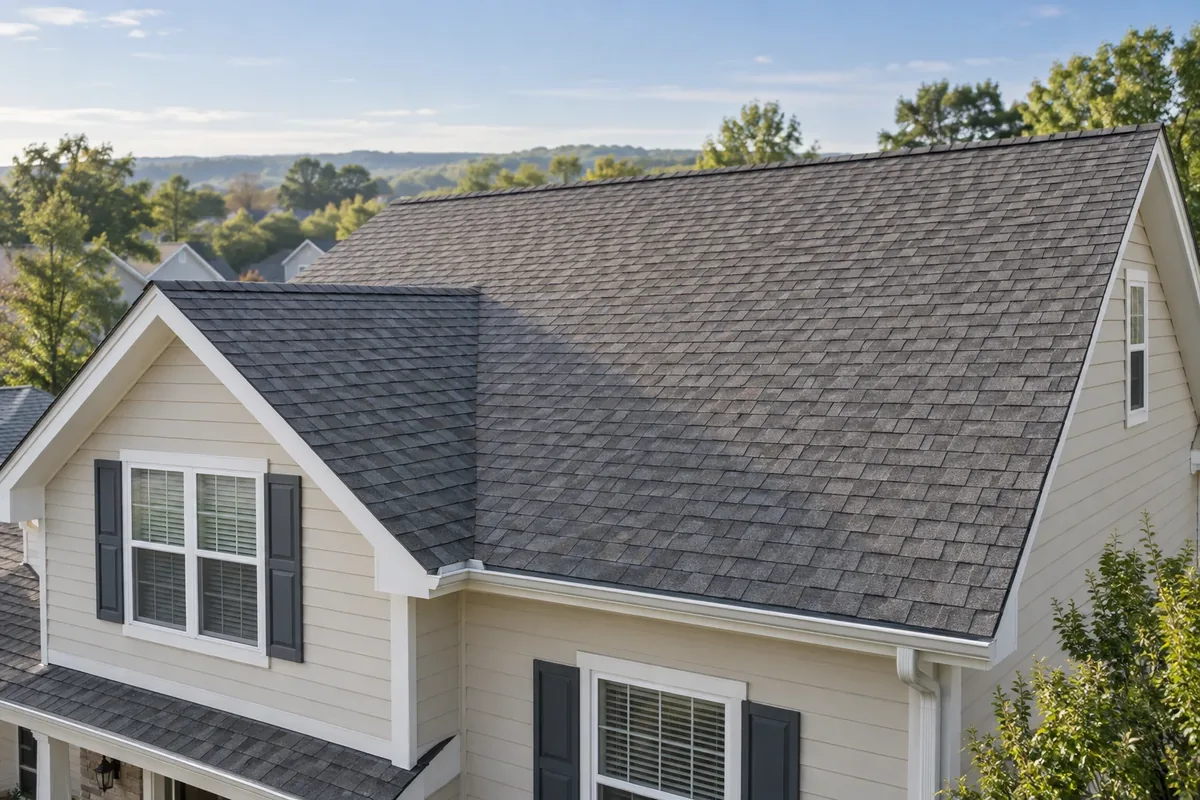
An asphalt shingle roof can still be keeping the rain out when an insurance company decides it is too old for its guidelines. That is one of the most frustrating parts of a roof-related non-renewal. The homeowner sees a roof that is functioning. The insurer sees a roof that may be closer to a costly wind, hail, or water loss.
There is no national rule saying every asphalt shingle roof becomes uninsurable at 15, 20, or 25 years. Insurance companies use different underwriting guidelines. Some rely heavily on age. Others give more weight to visible condition, roof material, prior claims, inspection results, location, and the overall condition of the property.
The practical answer is that many asphalt shingle roofs last for decades, but an insurer may restrict coverage or decline the property before the roof reaches the end of its physical service life. Understanding that difference can help you respond more effectively if your insurance was denied because of roof age or you were non-renewed because of your roof.
Quick Answer
Asphalt roofs commonly remain in use for decades, but published lifespan estimates differ by product and source. An insurer may change eligibility or roof coverage before the covering reaches its physical end of life. Verify the installation date, inspect current condition and compare the proposed endorsement rather than relying on a warranty label.
What Is an Asphalt Shingle Roof?
An asphalt shingle roof is a roofing system, not just a layer of shingles. The complete system may include the roof deck, underlayment, leak barriers, starter strips, field shingles, flashing, ventilation, and hip and ridge materials. A problem with any of those components can affect performance even when the visible shingles appear acceptable from the ground.
The two categories homeowners hear about most often are 3-tab shingles and architectural shingles.
3-Tab Shingles
Three-tab shingles are generally single-layer strip shingles with cutouts that create three tabs. They usually have a flatter, more uniform appearance and were widely installed for many years because they were economical.
Architectural Shingles
Architectural shingles are also called dimensional or laminated shingles. They are made with multiple laminated layers that create a thicker, more dimensional appearance. They are now more common on residential homes and are generally associated with longer warranty terms and stronger performance characteristics than traditional 3-tab products.
The label alone does not determine insurability. An older architectural roof with active damage may create more concern than a well-maintained 3-tab roof with clear documentation. Underwriters evaluate the roof that is actually on the house, not just the product category.
How Long Do Asphalt Shingles Really Last?
Manufacturer estimates provide context, not a countdown. GAF's general roof guidance lists 20 to 30 years for three-tab shingles and 30 to 50 years for architectural shingles. Atlas describes 25 to 30 years for quality architectural systems installed properly. The different estimates show why a single number should not determine a repair, replacement or insurance decision.
| Shingle type | Published service-life examples | What to check on your roof |
|---|---|---|
| 3-tab | 20 to 30 years in GAF's general guidance | Current condition, attachment, previous repairs and local exposure |
| Architectural | 25 to 30 years in Atlas guidance; 30 to 50 in GAF's general comparison | Exact product, installation, supporting components and current condition |
| Impact-resistant or polymer-modified | Product-specific; no single lifespan for the category | Product identification, test classification and warranty conditions |
Actual service can be shorter or longer. A published range, impact classification or warranty term does not guarantee storm performance, insurability or remaining watertight life.
Wind performance also belongs to the particular product and installed assembly. Do not assign a universal miles-per-hour rating to all architectural or three-tab shingles.
What Shortens or Extends Asphalt Shingle Roof Life?
Installation
The roof deck, underlayment, flashing, starter materials, fastener placement, and sealing all matter. Poor workmanship can create problems long before the shingles would normally wear out.
Ventilation and Moisture
Balanced intake and exhaust ventilation helps remove attic heat and moisture. Attic design, air sealing and insulation also matter. Moisture problems may damage decking or insulation even when the shingles look acceptable. The ventilation guide distinguishes conventional vented attics from properly designed unvented assemblies.
Climate and Storm Exposure
Intense sun, temperature swings, humidity, freezing weather, wind, and hail can accelerate aging. Damage may be obvious, such as missing shingles, or difficult to identify without a qualified inspection.
Drainage and Maintenance
Clogged gutters, leaf buildup, overhanging limbs, debris, and flashing problems can hold moisture or damage the roof surface. Timely repairs may prevent a small issue from spreading, while repeated patching or unresolved leaks may signal a larger problem.
Roof Age, Service Life, and Warranty Are Three Different Things
Product Warranty
A manufacturer's warranty is a contract with conditions, exclusions, prorating rules, installation requirements, and limits. A limited lifetime warranty does not mean the roof is guaranteed to last forever, and it does not guarantee that an insurance company will provide replacement cost roof coverage for the same period.
Physical Service Life
Service life is how long the roof system continues to perform adequately under its real conditions. It depends on the product, installation, ventilation, climate, maintenance, and exposure to damaging events.
Insurance Underwriting Age
Insurance age is the point at which a particular carrier changes how it views the roof. The company may require an inspection, reduce the roof settlement basis, apply a roof payment schedule, add a wind or hail limitation, offer a roof exclusion, require replacement, or decline the property.
A roof may still have physical life remaining while falling outside one company's underwriting rules. That does not automatically mean the home is uninsurable. It may mean a different carrier or policy structure needs to be considered.
Why Insurers May Say No Before the Roof Fails
Insurance underwriting is forward-looking. The carrier is not only asking whether the roof leaks today. It is estimating the likelihood and possible cost of a covered loss during the policy period.
- The roof exceeds the company's age guideline.
- The installation date cannot be verified.
- Photos show curling, cracking, missing shingles, heavy granule loss, patching, moss, debris, or deterioration.
- Aerial imagery or an exterior inspection raises concerns.
- There are prior wind, hail, or roof-related claims.
- Repairs cannot be documented.
- There are active leaks, ceiling stains, rotten decking, sagging, or open damage.
- The property has significant catastrophe exposure.
- Other parts of the home show deferred maintenance or unsafe conditions.
Some insurers use age as a firm screening rule. Others consider condition and documentation. A third may consider the home only with restricted roof terms. One decline is not proof that every market will give the same answer.
Common Insurance Outcomes for an Older Asphalt Roof
An insurer may accept the roof, ask for records or repairs, change its loss settlement to actual cash value or a payment schedule, restrict a cause of loss, apply a roof exclusion, or decline the property. These outcomes have different financial effects.
The roof exclusion insurance guide compares those terms. Before accepting a limitation, ask how the actual endorsement treats direct roof damage, decking, flashing and water that reaches the interior. The claims guide explains why the cause and resulting damage require separate review.
How to Show That an Older Roof Is Still Serviceable
Documentation cannot force an insurer to change its rules, but it can give a flexible underwriter better information.
Establish the Roof Age
Look for the contractor invoice, permit, warranty registration, closing documents, prior appraisal, home inspection, claim file, or seller disclosures.
Obtain a Detailed Inspection
A useful report should identify the material, estimated age, number of layers, visible condition, active leaks, missing or damaged shingles, granule loss, flashing, drainage, ventilation, decking concerns, prior repairs, and estimated remaining useful life. It should be dated, signed, and supported by clear photos.
Document Repairs and Current Condition
Keep paid invoices, permits, warranties, before-and-after photos, and proof that prior claim repairs were completed. Photograph all roof planes, valleys, penetrations, gutters, attic areas, and interior ceilings without climbing onto the roof unless you are qualified to do so safely.
An inspection may help when the roof is older but serviceable and has no active leaks. It is less likely to solve severe deterioration, a tarp, open storm damage, sagging, rotten decking, widespread staining, or a loss already in progress. Repairs may be required first.
What to Do After a Roof-Age Non-Renewal
- Read the notice and identify the exact effective date.
- Ask whether the decision is based on age, condition, claims, aerial imagery, inspection findings, or a broader underwriting change.
- Request the inspection report or photographs when available.
- Gather proof of roof age and prior repairs.
- Obtain a detailed roof inspection if the roof appears serviceable.
- Fix urgent maintenance or damage promptly.
- Track the expiration date and arrange replacement before coverage ends whenever possible.
- Contact an independent specialist experienced in insurance after non-renewal and homeowners insurance for older roofs.
- Compare coverage terms, not just premium.
- Build a realistic repair or replacement plan even if a temporary insurance option is available.
Moving early matters. A last-minute search is harder, and a lapse can create additional underwriting and lender problems.
Could a Specialty Policy or Roof Exclusion Help?
Sometimes. If the roof is older but serviceable, a different insurer may consider documentation or a policy with limited roof terms. Availability depends on the property, state, insurer and current underwriting requirements. Active leaks, unsafe conditions or unrepaired storm damage may need to be corrected first.
A roof exclusion can leave the homeowner responsible for both an excluded roof loss and related damage addressed by its wording. Compare that retained risk with other available private coverage and any state residual-market option. Check lender requirements before relying on reduced roof coverage.
Build a Long-Term Roof Plan
Limited roof coverage may help maintain insurance while the homeowner works toward a stronger position. A practical plan may include repairing active problems, saving or arranging financing, replacing the roof when feasible, preserving all records, notifying the insurer after completion, and obtaining written confirmation that any restriction has been removed.
A new roof may improve future options, but it does not guarantee acceptance. The insurer will still evaluate the location, claims history, property condition, and its current underwriting appetite.
For comparison with other materials, use the complete roof and insurance guide.
An Older Asphalt Roof Does Not Always Mean You Are Out of Options
A roof-related decline or non-renewal is serious, but it is not proof that no private insurance option exists. The next step is to determine whether the problem is roof age, roof condition, missing documentation, prior claims, the carrier's current guidelines, or a combination of factors.
When the roof is older but still serviceable, an independent high-risk homeowners insurance specialist may be able to compare flexible standard carriers, specialty markets, limited roof terms, and FAIR Plan alternatives. Coverage is not guaranteed, and active damage may need to be repaired first.
Request a roof exclusion quote
Availability and coverage are not guaranteed. Quote requests are unavailable for properties in California, Hawaii, New York and Rhode Island.
Frequently Asked Questions About Asphalt Shingle Roof Lifespan and Insurance
How many years does an asphalt shingle roof usually last?
There is no guaranteed lifespan. The manufacturer estimates in the table differ by product and source. Actual condition and installation matter more than choosing the longest published estimate; the range does not determine whether an insurer will accept the roof.
Can I get homeowners insurance with a 20-year-old asphalt roof?
Sometimes. There is no universal national replacement age, but individual insurers may use firm age guidelines, inspection rules, or restrictions. A carrier may consider condition, claims, location, documentation, and the rest of the property, or offer actual cash value, a roof schedule, a wind or hail limitation, or a roof exclusion.
Can an inspection or roof records overcome an insurer's age limit?
A current, detailed inspection with photographs may help a flexible underwriter assess condition, active leaks, and deterioration, but it cannot force a company to waive a firm rule. Installation invoices, permits, warranties, repair invoices, claim records, and proof of completed repairs help establish the history. Documentation supports review without guaranteeing approval.
Are architectural shingles easier to insure than 3-tab shingles?
Architectural shingles are generally thicker and associated with longer expected service life, but the label does not guarantee better terms. Age, condition, installation, claims, location, and carrier guidelines still control.
Is actual cash value roof coverage the same as a roof exclusion?
No. Actual cash value generally allows payment for a covered loss after depreciation, while a true exclusion may provide no payment for the excluded damage. Roof schedules and wind or hail limitations are also different.
Will my mortgage lender accept limited roof coverage?
Possibly, but lender and servicer requirements vary. Obtain approval for the exact policy terms before relying on a roof exclusion or other significant restriction.
About this information
This is general education. RoofExclusion.com provides information and a way to request assistance, and does not issue policies or decide claims. Coverage, eligibility, repair requirements and lender acceptance depend on the property, insurer, state and actual policy. Use qualified roofing and insurance professionals for decisions about your home.
Sources
- GAF: roof repair, replacement and service-life guidance
- Atlas Roofing: architectural shingles and expected service life
- U.S. Department of Energy Building America: vented and unvented attics
- NAIC: actual cash value and replacement cost